
Garden Fencing Supplied & Fitted in Sheffield
Closeboard, panels, hit and miss, slatted screens, post and rail and composite — fitted by our own team across Sheffield and South Yorkshire. Old fence taken down and taken away, posts set properly, and a run that follows the ground you actually have rather than the flat garden a price list assumes.
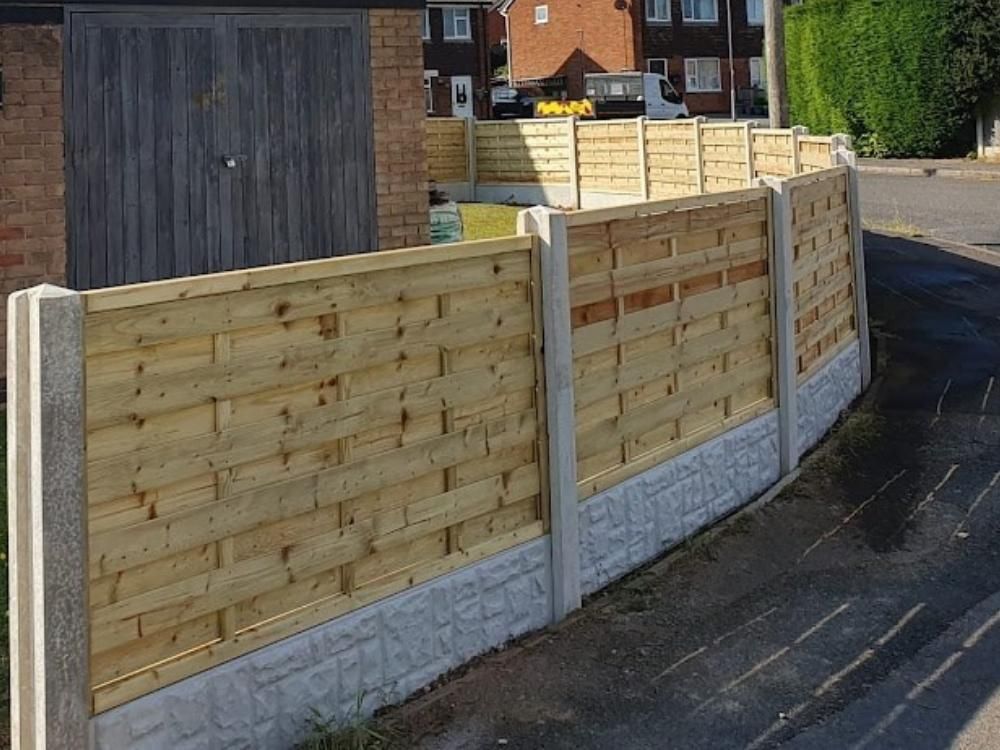
Fencing we have fitted across Sheffield
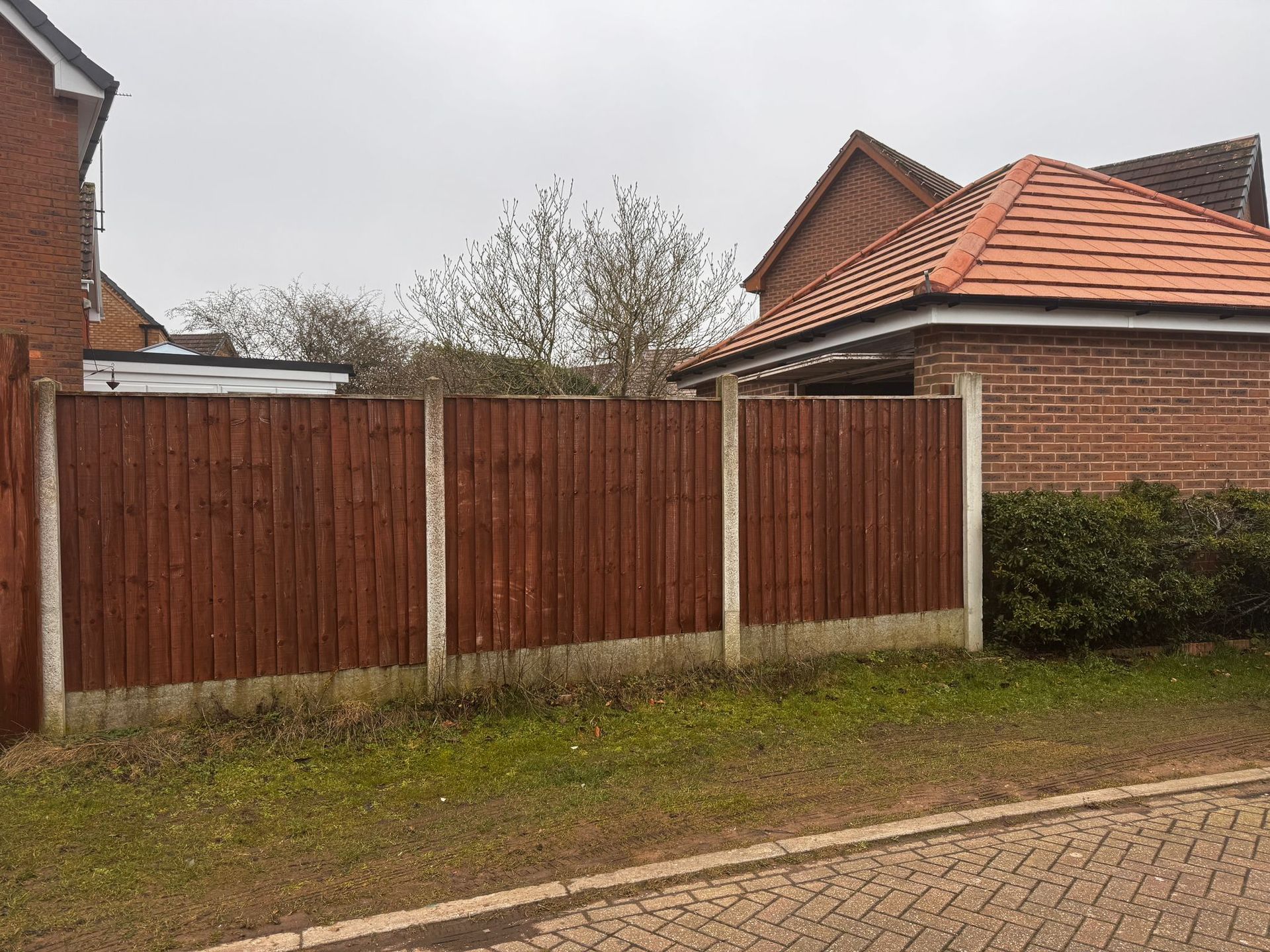
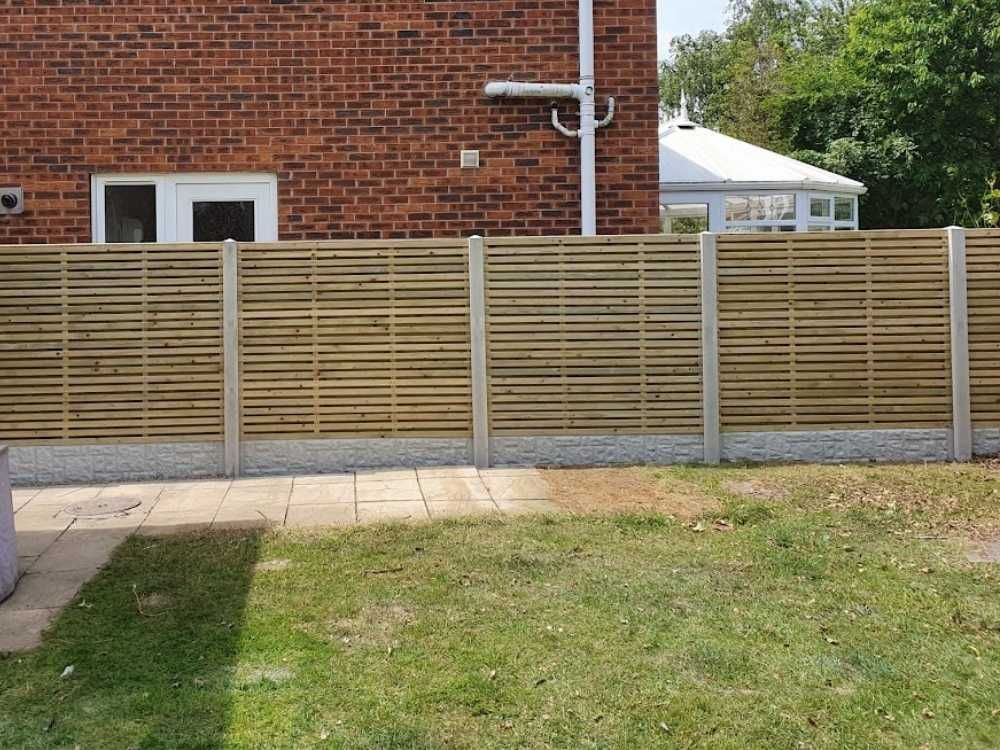
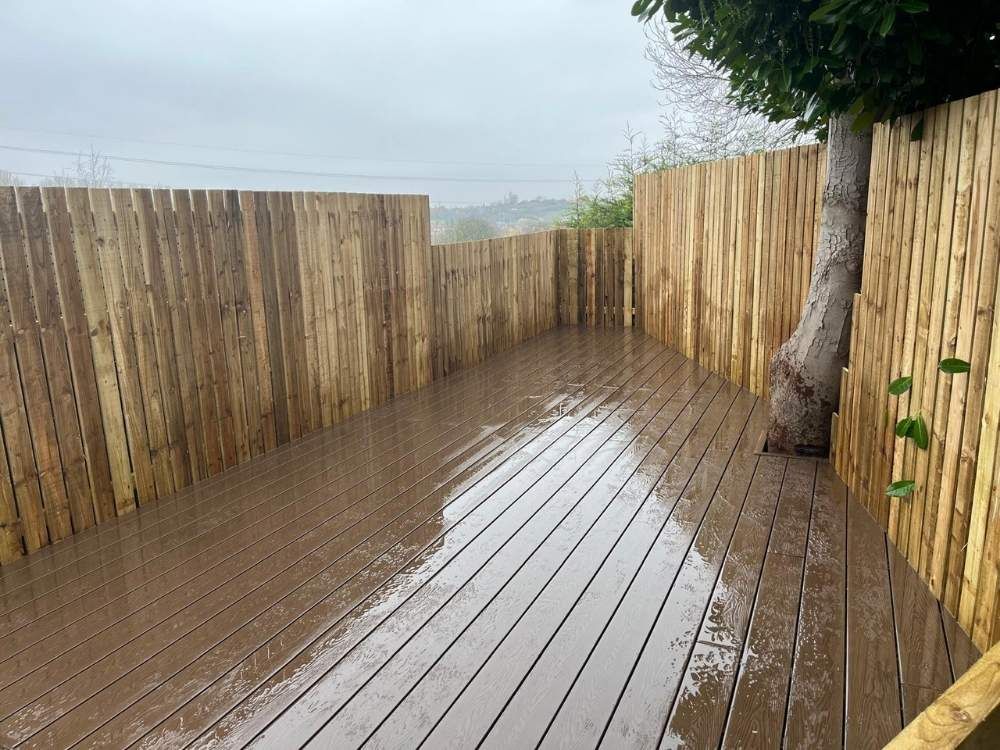
A boundary is only as good as what holds it up. Here is a small selection of recent fencing across Sheffield — closeboard and slatted panels, concrete posts and gravel boards, and runs built to sit properly on sloping ground.
Types of Fencing We Fit
Residential garden fencing across Sheffield. What suits your garden depends on how exposed it is, how much privacy you want and how much upkeep you are prepared to do.
Closeboard Fencing
Featheredge boards fixed to rails on site rather than pre‑made panels. The strongest timber option and the one to choose on an exposed boundary or a windy hillside plot.
Fence Panels
Lap or waney‑edge panels dropped between posts. The most cost‑effective way to replace a run quickly, and simple to swap a single panel later if one is damaged.
Hit and Miss Fencing
Boards alternating either side of the rails. Wind passes through instead of pushing against it, and it looks the same from both sides — useful where a neighbour shares the view.
Slatted Screens
Horizontal slats with even gaps for a contemporary finish. Popular around patios, seating areas and hot tubs where the fence is part of the design rather than just a boundary.
Post and Rail & Picket
Open fencing that marks a boundary without closing off a view. Suited to front gardens, larger rural plots and internal divisions within a garden.
Composite Fencing
No painting, no rot, no warping, at a higher up‑front cost. See our dedicated composite fencing in Sheffield page for the detail.
Posts and Gravel Boards Decide How Long It Lasts
Fences almost never fail in the middle of a panel. They fail at ground level, where the post meets the soil, and everything above it comes down in the first serious gale. It is the same failure every time, and it is why two quotes for the same run of fencing can differ so much.
Concrete posts and gravel boards keep timber clear of permanently wet ground and will outlast timber posts comfortably. They cost more and some people dislike the look. Timber posts suit the softer, more traditional appearance many Sheffield gardens want, and last well when properly treated and set — but they are the component that will eventually need replacing. A gravel board along the bottom is worth having either way, because it takes the damp and the strimmer damage instead of the panel.
Sheffield adds its own complication. On the steeper streets around the hills, a fence run rarely sits on level ground. Panels can be stepped down the slope, which leaves triangular gaps beneath each one, or the run can be raked to follow the fall. Both are legitimate, they look quite different, and it is worth deciding which you want before the job starts rather than after.
Where a fence meets a raised deck or a garden building, we can build the two to line up properly — the same team that fits your fencing also builds timber decking, composite decking and garden rooms.
Fence Height, Boundaries and Who Owns What
Two questions come up on nearly every fencing job, and getting them wrong is expensive because a fence in the wrong place may have to come down again.
Height. Under permitted development rules in England you can generally erect a fence up to 2 metres high without planning permission — but that drops to 1 metre where the fence adjoins a highway used by vehicles, or a footpath alongside one. That is the rule that catches out front gardens. Note also that the height is measured from ground level, and where ground levels differ between two properties this is not always as obvious as it sounds. Listed buildings and some conservation areas have tighter restrictions again.
Ownership. There is no legal rule that says you own the fence on the left, or that the side with the posts and rails facing in is yours. That is folklore, and it is wrong often enough to cause real arguments. The reliable answer is in the property deeds or the Land Registry title plan, where a T‑mark on one side of a boundary line usually indicates responsibility for it. If you are not certain, it is worth checking before commissioning work, and worth a conversation with your neighbour either way.
We can only fit a fence on a boundary you are entitled to fence. We are fencing contractors, not solicitors or surveyors, so the above is the general position rather than advice on your property — if a boundary is genuinely disputed, that needs resolving properly before anyone starts digging post holes.
How We Work
The old fence goes with us. Taking down and removing the existing fence and posts is part of the job, not a surprise line on the invoice.
Posts set properly. Dug to depth and concreted, because a post that moves takes the whole run with it in the first storm.
Treated timber throughout. Pressure treated components chosen for a boundary that lives outdoors in a wet city.
Sloping ground handled. Stepped or raked to follow the fall, agreed with you before we start.
Our own team. The family run business that quotes the work carries it out.
Free quotes 24/7. Send photos and a rough run length and we can usually price it without visiting first.
Get a Provisional Fencing Quote
Send a couple of photos of the boundary and a rough length in metres or panel count. We will come back with a provisional figure and tell you honestly whether timber or composite makes more sense for your garden.
Fencing Questions We Get Asked in Sheffield
How high can a garden fence be without planning permission?
Generally up to 2 metres, measured from ground level. Where the fence adjoins a highway used by vehicles, or a footpath beside one, the limit drops to 1 metre. Listed buildings and some conservation areas are more restricted, so check with Sheffield City Council if unsure.
Which fence is mine, the left or the right?
Neither, as a rule. The idea that you always own one particular side is a myth. Responsibility is set out in the property deeds or Land Registry title plan, often shown by a T-mark on the boundary line. Check there before commissioning work on a shared boundary.
Do you remove the old fence?
Yes. Taking down the existing fence, digging out the old posts and taking everything away is included as part of the job. If there is a large volume of concrete from old post bases we will mention it at quote stage rather than after.
Should I choose concrete or timber posts?
Concrete posts with gravel boards keep timber out of wet ground and will last longer, at a higher cost and with a more utilitarian look. Timber posts look softer and more traditional and perform well when properly treated and set. We will talk through both for your boundary.
Can you fence a sloping garden?
Yes, and in Sheffield it is routine. A run can be stepped down the slope, which leaves small gaps beneath each panel, or raked so it follows the fall of the ground continuously. They look quite different, so we agree the approach with you before starting.
Is composite fencing worth the extra cost?
It depends how long you intend to stay and how much you dislike maintenance. Composite costs more up front and needs no painting, staining or panel replacement. Timber is cheaper initially and will want treating periodically. Our composite fencing page covers the comparison in detail.
How long does a fence installation take?
Most domestic garden fence runs are completed within a day or two, depending on length, access and ground conditions. Rocky ground, old concrete post bases and awkward rear access through a terrace all add time, and we will tell you at quote stage if we expect any of those.