
Composite Fencing in Sheffield — Supplied & Fitted
Composite boards slot between aluminium posts, so there is nothing to stain, nothing to warp and nothing sitting in wet ground. We install across Sheffield in charcoal, graphite and cedar finishes — and if you already have concrete posts in good condition, we can often reuse them and bring the cost down considerably.
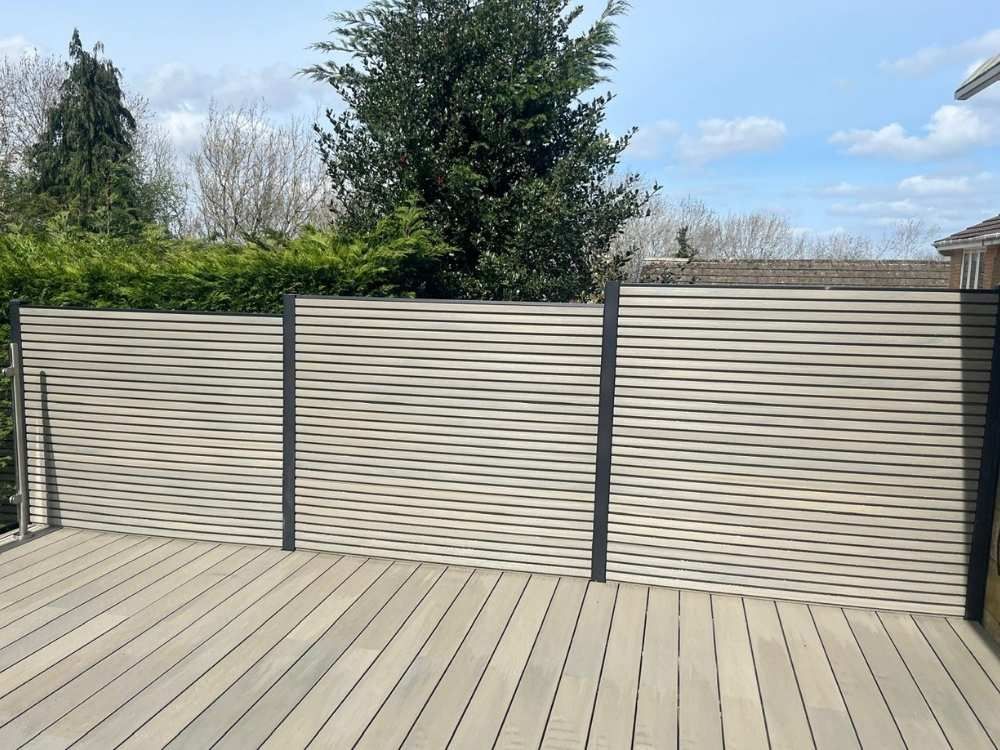
Composite Fencing Installers Sheffield
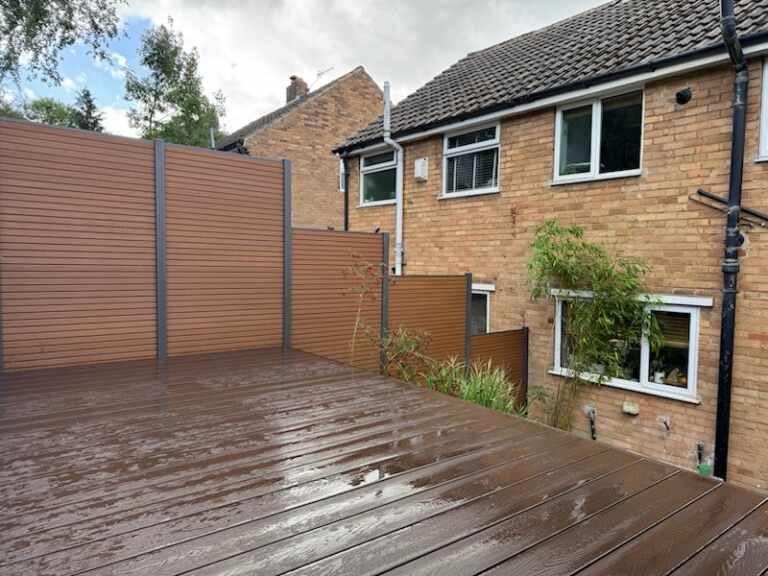
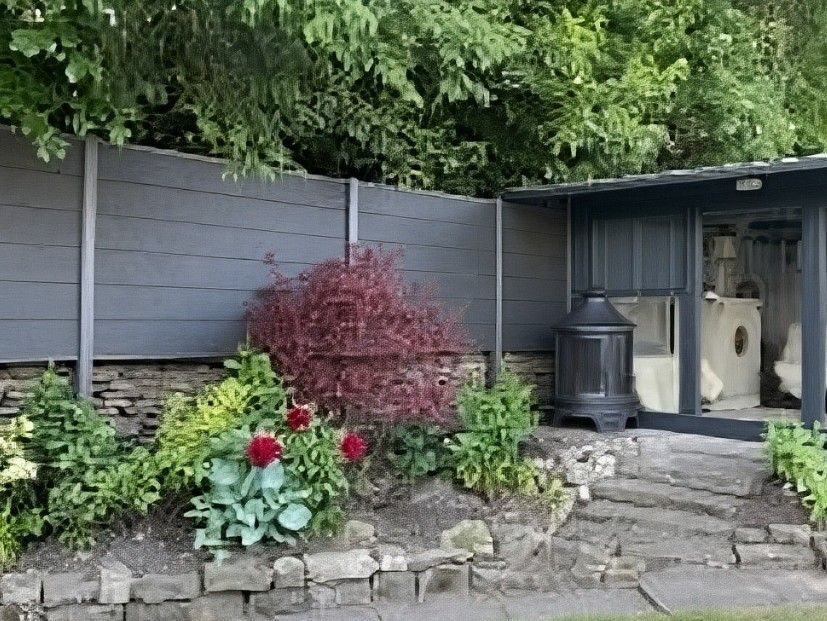
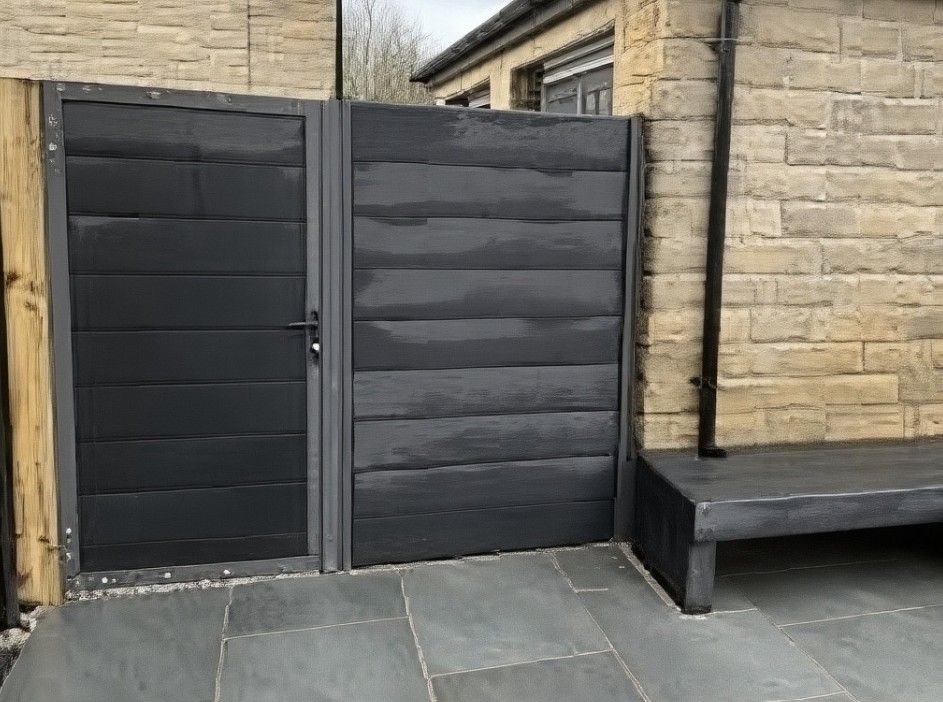
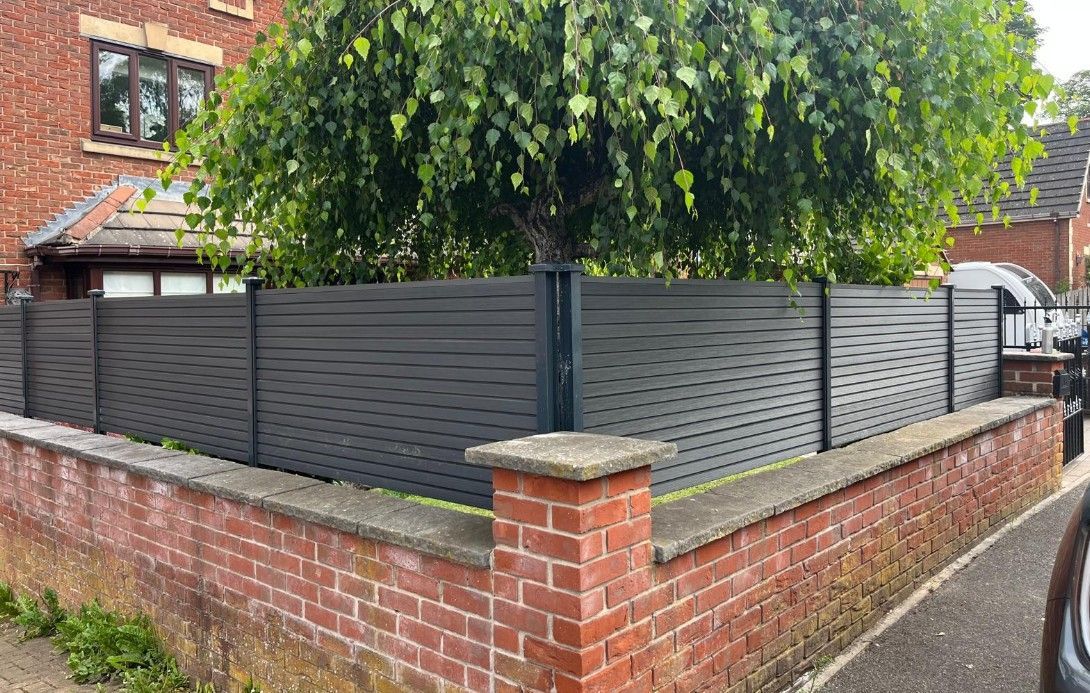
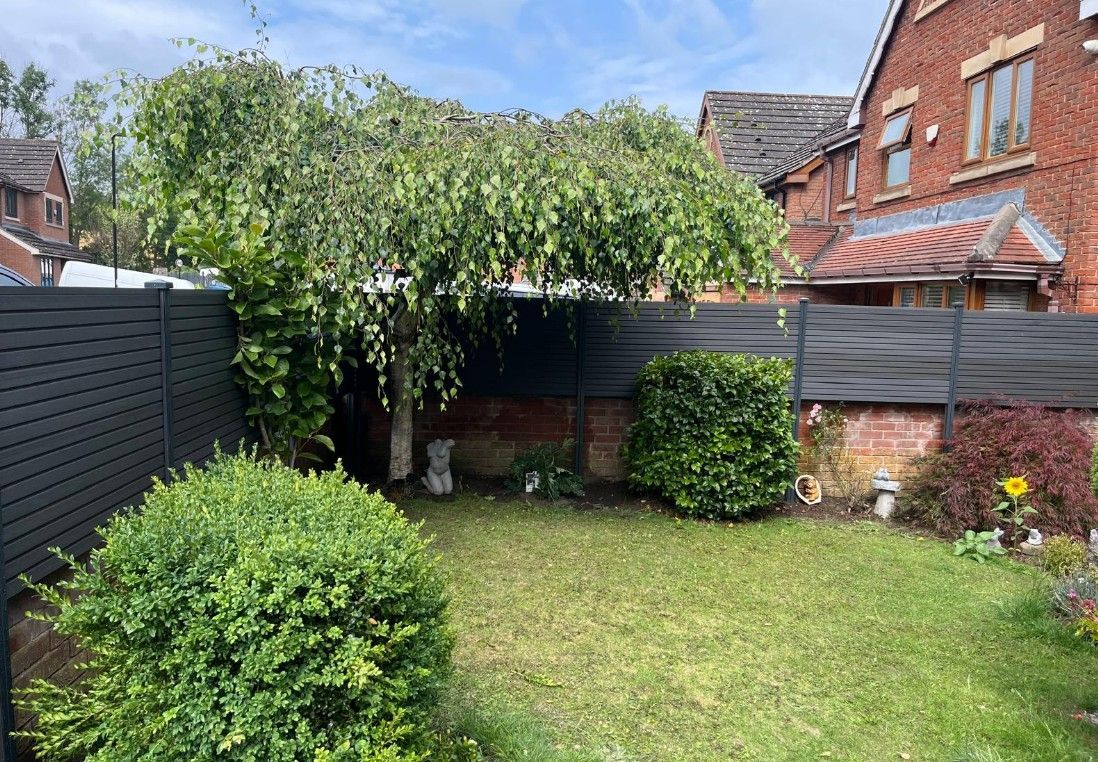
Why Sheffield Homeowners Switch to Composite
Composite fencing is made from recycled wood fibre and plastic pressed into boards that slot between posts. It looks tidy like timber and behaves nothing like it.
Nothing to Stain
No annual treating, no preserver, no weekend lost to a fence every other spring. A hose down once or twice a year is the whole maintenance schedule.
It Stays Straight
Softwood panels twist, cup and bow as they take on and lose moisture. Composite boards hold their shape, which is why a run still looks square years later.
Built for Exposure
Sheffield is hilly and it catches the wind. Aluminium posts set in proper concrete footings, with boards that will not soak up water at ground level.
Colour That Holds
Charcoal, graphite and cedar finishes. Expect a slight settling of tone in the first few months as the colour stabilises, then very little change after that.
Choice of Style
Solid boards for privacy, contemporary slatted for airflow and a lighter look, or decorative top sections. Matching composite gates where you need access.
Ties Into Decking
Where a boundary meets a deck we can build both to line up, using the same board range so the finish carries through. See our composite decking in Sheffield page.
You May Not Need to Replace Your Concrete Posts
This is the single biggest cost saving available on a composite fence, and most quotes never mention it. If your existing concrete posts are sound and standing plumb, composite boards can usually go straight between them — no digging, no new footings, no disposal.
There are two ways it works. A composite board around 52mm thick will slide directly into the groove of a standard concrete post, exactly as a timber panel would. Alternatively, where a thinner board is being used, most manufacturers supply a U channel system: the channel slides into the concrete post groove and is held with sealant, then the composite boards slide into the channel. Most ranges also offer top and bottom channels, which are largely cosmetic but frame the boards on all four sides so a run of individual boards reads as a single clean panel.
A word of caution before you count on it. Posts that are cracked, leaning or spalling at ground level are not worth building on, and a post that has already shifted will shift again. We check levels, plumb and condition at the survey and tell you honestly which posts can stay and which cannot. Where posts do need replacing, we would normally recommend aluminium, which will not rot at the base the way timber does and is considerably lighter to handle on a sloping garden.
One customer in Crookes had replaced the same timber fence twice in a decade because the posts kept soaking and shifting on the slope. We changed the boundary over to composite boards on aluminium posts set in proper concrete footings, and used composite boards in place of concrete gravel boards so the finish stayed uniform to the ground. Three winters on it is still arrow straight, and the only maintenance has been a hose down before barbecue season.
What the Job Involves
Free on-site survey. We check levels, ground conditions, access, any walls, and whether your existing concrete posts are worth keeping.
Design and options. Colour, height, solid versus slatted, and how the run ties into gates, walls or decking.
Fixed itemised quote. Posts, boards, groundworks and disposal listed separately so you can see exactly what you are paying for.
Old fence removed. Taken down, dug out and taken away as part of the job.
Installation. Post depth set to suit how exposed the boundary is, with the expansion gaps the board system specifies.
Typically one to three days. Depending on the number of bays and whether existing posts are being reused.
Composite Against Timber on Cost
Composite costs more up front than standard softwood. There is no getting around that, and anyone telling you otherwise is comparing the wrong things.
Where it earns the difference back is over ten to fifteen years, once you count the treatments you did not buy, the weekends you did not spend, and the panels you did not replace when timber warped or the post feet rotted. Against quality pressure treated or hardwood timber that is properly maintained, the long-term gap narrows considerably — composite still wins on time and consistency rather than on pure pounds. If you are moving in two years, timber may well be the sensible choice, and we will say so.
The one thing that genuinely changes the maths is reusing sound concrete posts, which takes a large slice of labour and groundworks out of the job. It is worth asking about before you compare quotes. If you want timber instead, we fit that too — see our fencing in Sheffield page.
Get a Fixed, Itemised Quote
Send a photo of the boundary and a rough length, or book a free site visit. We will bring samples, talk through options, and tell you whether your existing posts can stay.
Composite Fencing Questions
Can composite boards be used with my existing concrete posts?
Often yes, and it saves a substantial amount. Boards around 52mm thick slide straight into a standard concrete post groove, and thinner boards use a U channel fixed into the groove with sealant. The posts need to be sound and standing plumb, which we check at survey.
What is composite fencing made of?
A blend of recycled wood fibre and recycled plastic, pressed into solid boards. The mix gives you the appearance of timber with far better resistance to moisture, rot and UV, and it puts recycled material to use rather than landfill.
How long does composite fencing last?
Quality systems are designed for twenty years or more, and manufacturer warranties usually reflect that. Unlike timber it will not warp, splinter or rot, so the realistic lifespan depends more on how well the posts and footings were installed than on the boards themselves.
How do I clean a composite fence?
A hose down and a soft wash once or twice a year is normally all it needs. For stubborn marks use mild detergent and water with a soft brush. Avoid holding a pressure washer close to the boards, as concentrated high pressure can mark the surface.
Will composite fencing cope with Sheffield weather?
Yes. Moisture, frost and UV are what composite is built for, and it does not soak up water at ground level the way timber does. On exposed hillside boundaries the important detail is post depth and footings, which we set according to how exposed your particular run is.
Can I paint or stain composite fencing?
You can, but we would not advise it and it may void the manufacturer warranty. Composite is coloured through and supplied in a range of finishes, so it is far better to choose the colour you want at the outset than to paint over it later.
Are there any drawbacks to composite fencing?
Two worth knowing. It costs more up front than softwood, so it suits people staying put rather than moving soon. And the colour settles slightly during the first few months as it stabilises, which is normal weathering rather than a fault.
Can you repair storm damage to an existing fence?
Yes, and please mention it when you get in touch. We prioritise boundaries that have been left unsafe or insecure and will make them safe ahead of the next weather front, then talk through repair or replacement once the immediate risk is dealt with.