
Composite Decking Fitted in Sheffield
Installed by our own fitters — supply and fit only, not a board merchant
Composite decking costs more than timber up front and less to look after for the next twenty years, which is the trade‑off worth understanding before you commit. We design and install composite decking across Sheffield and South Yorkshire, including the sub‑frame, edge detail, steps and balustrades — the parts that decide whether a deck still looks right in ten years. Send photos and rough measurements for a provisional quote.

Composite decking we have built in Sheffield
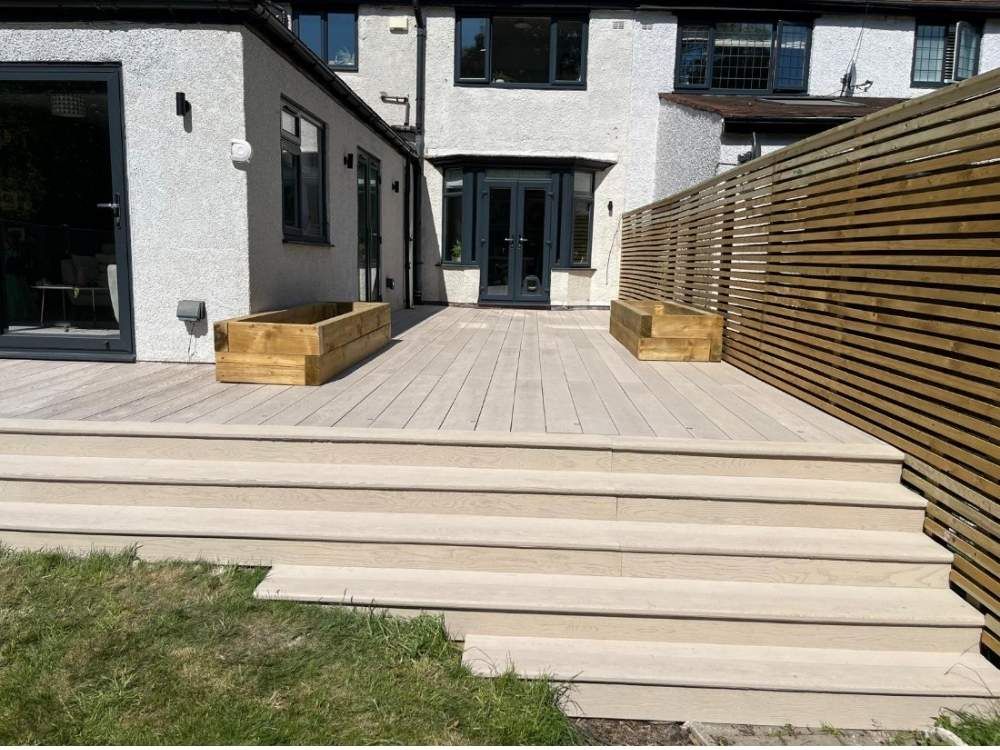
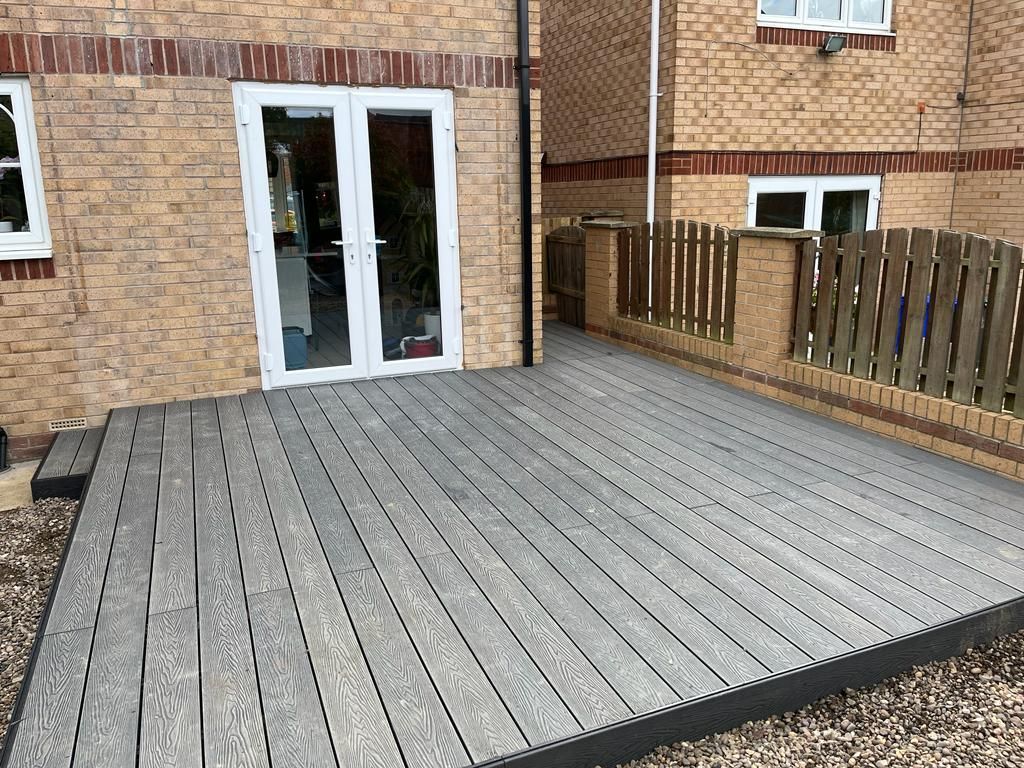
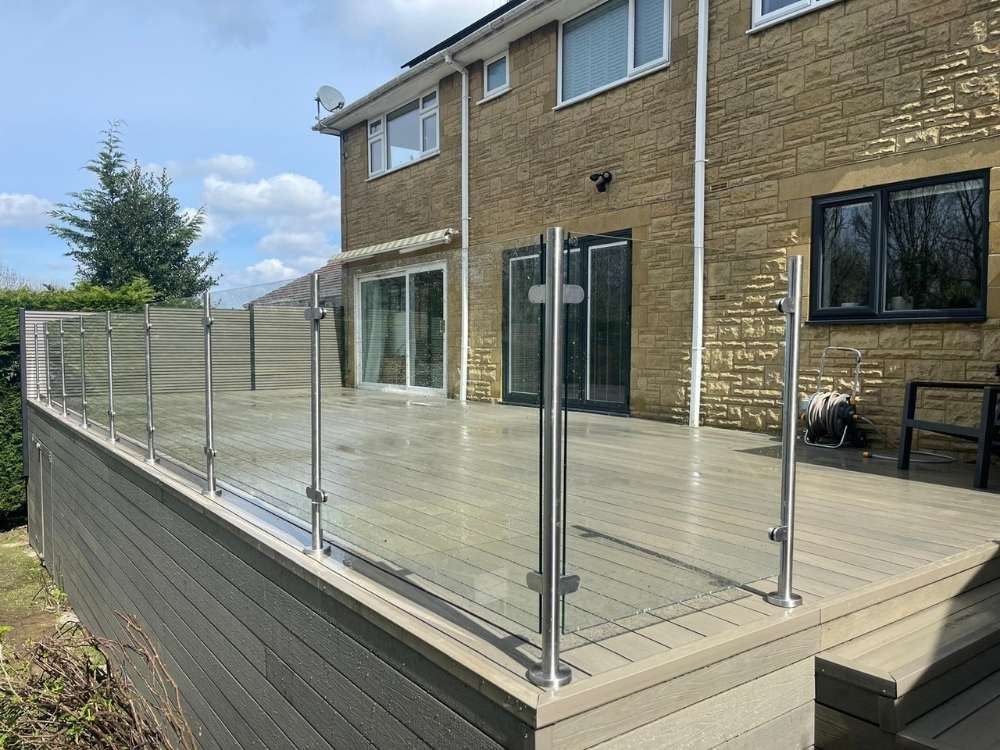
Every deck is built for the garden it sits in. Here is a small selection of recent composite installations across Sheffield — from a simple platform outside the patio doors to raised decks with steps, screening and glass balustrades.
What a Composite Deck Installation Includes
The boards are the part you see. Most of what decides whether a deck is still solid and level in fifteen years sits underneath them.
Ground Preparation
Clearing, levelling and setting out. Sheffield gardens rarely start flat, so this is where a raised or stepped design gets decided rather than guessed at.
The Sub‑Frame
Treated timber or aluminium joists at the spacing the board manufacturer specifies. Get this wrong and composite boards flex underfoot no matter how good they are.
Ventilation and Drainage
Airflow beneath the deck and a slight fall so water runs off rather than sits. The single most common fault we are called out to look at on other people's decks.
Hidden Fixings
Clip systems that hold boards without screw heads showing across the surface, leaving expansion gaps the boards need to move as temperatures change.
Edge and Fascia Detail
Matching fascia boards and corner trims closing the perimeter, so the deck looks finished from the garden rather than showing an exposed frame edge.
Steps and Balustrades
Steps down to the lawn and glass, metal or timber balustrades where the deck is raised enough to need a safe edge.
Composite Is Low Maintenance, Not No Maintenance
Composite is sold hard on the promise that you never have to do anything to it again. That is close to true compared with timber, but not quite true, and you are better hearing it now than discovering it in year three.
You will not be sanding, staining or oiling it. That is the real saving, and over fifteen years it is a substantial one in both money and weekends. What composite does still need is washing. In a city as green and as wet as Sheffield, decks pick up algae and a film of grime, particularly on north‑facing sections and anywhere overhung by trees. A wash down a couple of times a year keeps it looking like it did when it went down.
Wet composite can be slippery, in the same way wet timber is. Textured and grooved board surfaces help considerably, and keeping algae off helps more than anything else. If the deck will be used by anyone unsteady on their feet, tell us at design stage and we will talk through board finish and where handrails make sense.
The other honest point is fading. Early composite boards lightened noticeably in sunlight. Modern capped boards hold their colour far better, and most carry long manufacturer warranties covering it — but expect a slight settling of tone in the first year, which is normal rather than a fault.
Planning Permission and Deck Height
Most decks do not need planning permission, but there is a threshold worth knowing before you settle on a design, because almost nobody mentions it at quote stage.
Under permitted development rules in England, a raised platform such as decking is generally allowed without an application provided it sits no more than 300mm above ground level, and that it and other buildings cover no more than half the land around the original house. Go above that 300mm and you may need permission — which matters in Sheffield more than most places, because on a sloping garden a deck that is flush with the back door can easily stand a metre or more above ground at the far end.
Separately, where there is a drop of more than 600mm from the deck edge, guarding is required under Part K of the Building Regulations, at the appropriate height. That is a safety requirement rather than an optional design feature, and it is the reason a raised deck quote should always include balustrades.
Overlooking is the other consideration. A raised deck that gives a clear view into a neighbouring garden or window is the most common cause of objections, and it is worth thinking about before rather than after.
We build decks, we are not planning officers — the above is the general position rather than advice on your property. Sheffield City Council can confirm where you stand, and we are happy to design to keep a deck within permitted development where that is what you want.
How Much Does Composite Decking Cost in Sheffield?
As a guide, composite decking supplied and fitted typically works out between £150 and £250 per square metre. That range covers the boards, the sub‑frame, the fixings, the edge detail and the labour to build it, rather than a board price with everything else added later.
Where a job lands within that range, or occasionally above it, comes down to a handful of things. A straightforward ground level deck on firm, flat ground sits at the lower end. A raised deck on a sloping garden needing a heavier frame, steps and balustrades sits at the upper end. These are indicative figures rather than a quotation — send us photos and measurements and we will give you a real one.
Board range and grade. Capped boards cost more than uncapped and hold colour better. This is the largest single variable in most quotes.
Ground conditions. A flat, firm base is straightforward. A sloping or soft garden needs more sub‑frame and more labour.
Height off the ground. Raised decks need a heavier frame, steps and balustrades, all of which add to the figure.
Shape. A square deck cuts efficiently. Curves, angles and cut‑outs around trees or drains generate waste and time.
Access. Materials that can be wheeled straight in cost less to install than materials carried through a house or down steps.
Removing an old deck. Taking up and disposing of an existing deck is chargeable work and worth pricing separately.
Get a Provisional Composite Decking Quote
Send a couple of photos of the area and rough measurements. We can usually come back with a provisional figure without needing to visit first, and we install what we quote — we are not a board supplier.
Composite Decking Questions
How much does composite decking cost in Sheffield?
As a guide, composite decking supplied and fitted typically works out between £150 and £250 per square metre, covering boards, sub-frame, fixings, edge detail and labour. Ground level decks on flat ground sit at the lower end; raised decks needing steps and balustrades sit at the upper end.
How long does composite decking last?
Composite boards will not rot, warp or split the way timber does, and most quality ranges carry manufacturer warranties measured in decades. The realistic lifespan depends as much on the sub-frame beneath as the boards, which is why we build frames to the board manufacturer's specified joist spacing.
Is composite decking slippery when wet?
It can be, like any decking surface in wet weather. Textured and grooved board finishes give noticeably better grip, and keeping algae washed off makes the biggest difference of all. Tell us if the deck will be used by anyone unsteady on their feet and we will advise on finish.
Do you supply composite decking boards without fitting?
No. We are a supply and fit installer rather than a board merchant, so we only supply materials as part of an installation we carry out. That way the sub-frame, fixings, expansion gaps and edge detail are all our responsibility and covered by our work.
Can composite decking be laid over an existing deck or patio?
Over a sound patio, often yes, provided there is height available and drainage is not blocked. Over an existing timber deck we would normally want to inspect the frame first, because building a new surface over a frame that is already rotting simply hides the problem.
Does composite decking fade in sunlight?
Early composite boards faded noticeably. Modern capped boards hold their colour far better and are usually warranted against significant fading. Expect a slight settling of tone during the first year as the surface weathers in, which is normal and not a defect.
Do I need planning permission for a composite deck?
Usually not, if the deck sits no more than 300mm above ground level and does not cover more than half the garden. Raised decks above that height may need permission, which matters on Sheffield's sloping gardens. Sheffield City Council can confirm the position for your property.
How does composite decking compare to timber on cost?
Composite costs more to install and less to own. Pressure treated timber decking is the cheaper starting point, but needs oiling or staining every couple of years to reach its full life. Over fifteen years the gap narrows considerably once maintenance time and materials are counted.
Composite decking across Sheffield and South Yorkshire
We fit composite decking throughout Sheffield and the surrounding villages. If your area is not listed, get in touch anyway — we almost certainly cover it.